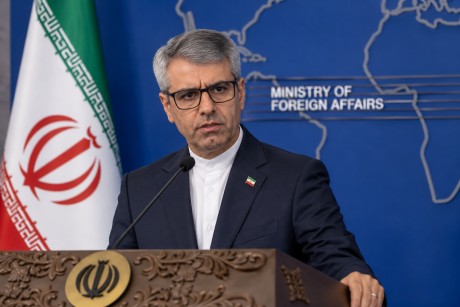
Iran has firmly denied any involvement in the Yemen conflict, asserting that the Houthi forces operate autonomously and make independent decisions. Esmaeil Baghaei, the Iranian Foreign Ministry spokesman, stated that Tehran does not meddle in Yemen’s affairs and dismissed claims suggesting Iran’s connection to recent events concerning Saudi Arabia and Yemen. Baghaei emphasized that the roots of the conflict are deeply embedded within Yemen itself.
A scheduled meeting in Oman, which aimed to bring Iran together with Gulf countries to discuss regional security and cooperation, has been postponed at the request of Saudi Arabia. This meeting was also intended to allow Iran and Oman to present an agreement they reached regarding maritime routes in the Strait of Hormuz. Despite the delay, Baghaei confirmed that the Iran-Oman agreement has been finalized, and both nations will determine their next steps independently.
Oman’s Foreign Minister, Badr Albusaidi, commented on the postponement, indicating that it was intended to support a broader consensus. He reaffirmed Oman’s dedication to dialogue and its commitment to fostering regional stability and long-term collaboration.
The conflict in Yemen has been a point of contention in the region, with various parties attributing different sources of influence and support. Iran’s recent statements aim to clarify its stance and disassociate itself from accusations of interference, highlighting the complexities and internal dynamics of the Yemeni crisis.