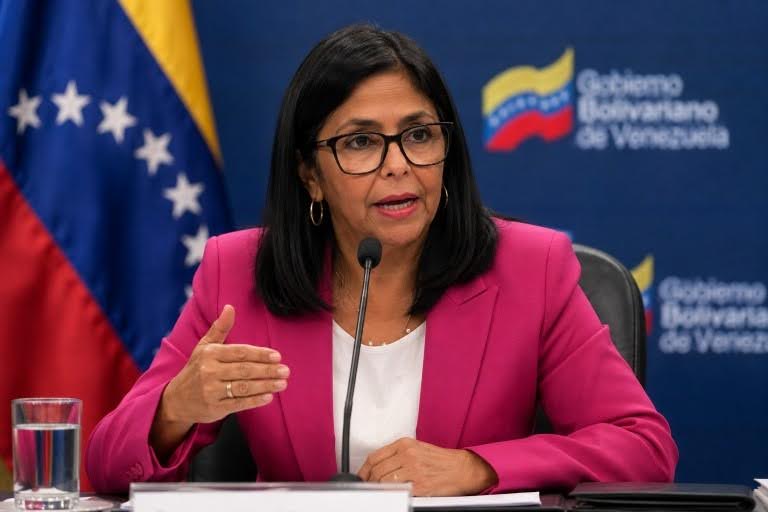
Venezuela’s interim leader, Delcy Rodríguez, has staunchly defended a contentious energy deal with the United States amid intense domestic criticism. Despite accusations that she is compromising Venezuela’s control over its vast oil reserves, Rodríguez assured citizens that the nation retains full ownership and sovereignty over its resources. This agreement, which was reportedly negotiated clandestinely over several months, has sparked widespread debate within Venezuela, as it grants the US significant control over the country’s oil assets.
Rodríguez, who assumed the presidency earlier this year following the removal of Maduro in a US-led operation, emphasized the agreement’s potential to significantly boost the Venezuelan economy. She highlighted that the deal could potentially generate over $209 billion in revenue, positioning Venezuela as a leading energy producer. She argued that without necessary investments, technology, and infrastructure, the country’s vast oil reserves remain untapped and unable to contribute to tangible economic development for its citizens.
Under the agreement, the US would gain control over a considerable portion of Venezuela’s crude reserves, which are the largest proven reserves globally, surpassing those of Saudi Arabia and Iran. The deal involves 17 strategic oilfields with a projected production capacity of more than 1.5 million barrels per day. While Rodríguez asserts the deal’s benefits, it has ignited protests and criticism, with detractors labeling it as a violation of national sovereignty and a historical first for Venezuela in terms of relinquishing such control to a foreign entity.
In Caracas, demonstrators took to the streets to protest what they perceive as foreign encroachment on national resources, and social media users have ridiculed the situation by suggesting a new identity for the state oil company. The agreement represents a dramatic shift for Rodríguez and her political movement, which has traditionally opposed foreign domination over Venezuela’s resources. Past statements from Rodríguez have even warned against similar arrangements, underscoring the reversal in stance.
Opposition leaders are concerned that this deal could hinder efforts to restore democratic elections in Venezuela. They argue that sustainable economic benefits are contingent on transparent governance and free elections, without which the agreement could be precariously based. Critics worry that the focus on the energy deal may divert attention from essential democratic processes, leaving the timing of future elections uncertain.