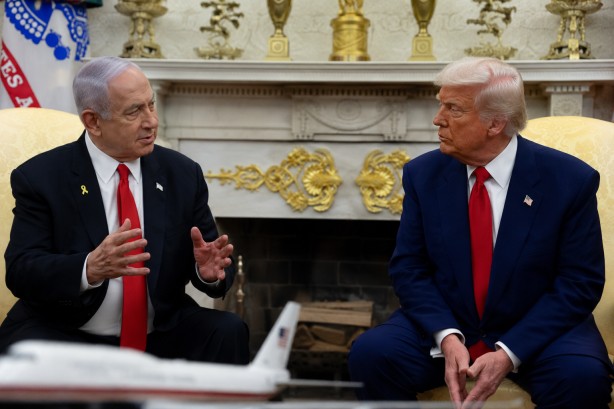
Israeli Prime Minister Benjamin Netanyahu and U.S. President Donald Trump recently convened at the White House for an in-depth discussion centered on Iran, regional security, and strengthening U.S.-Israel relations. The meeting highlighted three potential strategies towards Iran: seeking a diplomatic resolution, intensifying economic sanctions, or considering military measures. This dialogue was characterized as an exchange of ideas rather than an endorsement of any specific plan.
Netanyahu voiced skepticism regarding Iran’s commitment to any future agreements, yet refrained from urging the U.S. to engage in new military actions. Both leaders underscored their mutual goal of preventing Iran from acquiring nuclear weapons. The discourse also touched on strategies to escalate economic pressure on Tehran while attempting to mitigate repercussions on global energy markets. Netanyahu emphasized that Iran should not exploit the Strait of Hormuz as a negotiation tool.
Discussions extended to regional security matters, reflecting on Israel’s military involvements in Syria and southern Lebanon. Netanyahu used maps to delineate Israel’s security apprehensions, stressing the importance of retaining defensive stances against possible threats. This strategic dialogue illustrates ongoing concerns about regional stability and Israel’s security posture.
In terms of defense collaboration, the leaders explored future U.S.-Israel defense partnerships. Netanyahu suggested a gradual decrease in Israel’s dependence on U.S. military aid over the next ten years, coupled with an expansion of joint defense research and development initiatives. This proposition aims at fostering a more autonomous yet collaborative defense relationship.
Despite circulating reports of discord between Netanyahu and Trump, an Israeli official downplayed such narratives, describing the relationship as both close and cooperative. The meeting underscored the ongoing commitment to a strong bilateral relationship amid evolving regional dynamics and shared policy objectives. The leaders’ conversation reflects their unified stance on critical security issues and their dedication to maintaining a robust alliance.