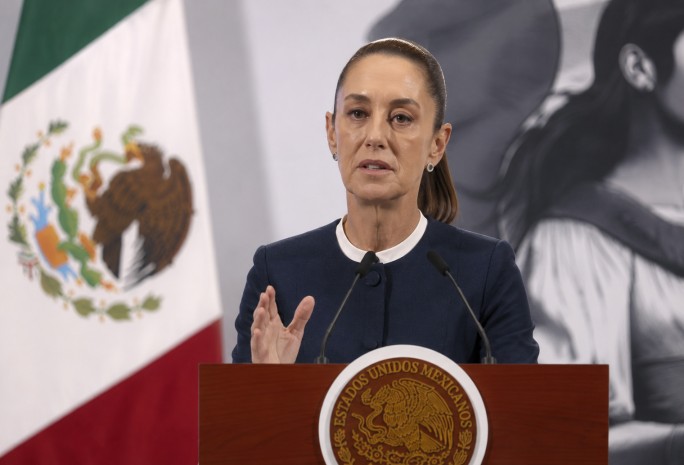
In response to a recent decision by the United States to impose a new 10% tariff on Mexican exports that are not covered by the USMCA trade agreement, Mexican President Claudia Sheinbaum has stated that her administration is actively working to ensure long-term trade stability. She emphasized that Mexico’s primary goal is to avoid unexpected tariffs in the future while maintaining favorable trade conditions compared to other nations.
Sheinbaum characterized the U.S. action as a unilateral move and acknowledged the complexities of negotiating with the United States, citing President Donald Trump’s protectionist trade policies as a significant challenge. She highlighted Mexico’s ongoing efforts to establish a long-term agreement that would provide more predictability for investors and bolster the country’s trade standing.
The new tariffs particularly affect sectors such as automobiles, steel, aluminum, and other raw materials, creating additional pressure on Mexico’s export economy. As the United States and Mexico engage in a review of the USMCA trade agreement, there is a divergence in priorities. U.S. officials are advocating for stricter regional content rules in key industries.
Meanwhile, Mexico is pushing for enhanced regional integration that not only benefits both economies but also preserves the close trade relationship that has developed over the years. Mexico’s stance underscores the importance of maintaining a collaborative trade environment that supports continued economic growth and partnership between the two nations.