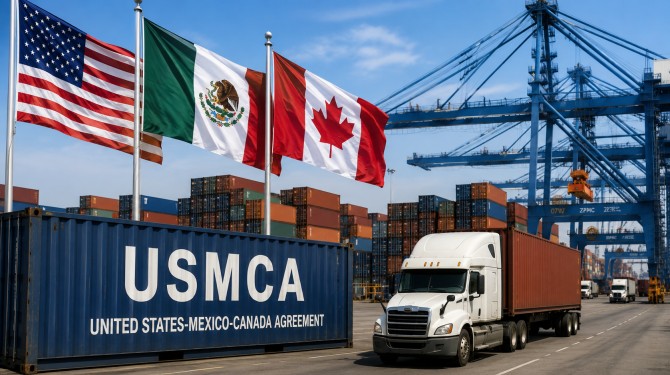
Mexico has initiated its first annual review of the US-Mexico-Canada Agreement (USMCA), aiming to reduce increasing trade tensions with the United States amidst the looming threat of new tariffs. The review marks a critical step in addressing the economic strain between the neighboring countries. Mexican President Claudia Sheinbaum is set to engage in discussions with U.S. Trade Representative Jamieson Greer in Mexico City. These meetings follow a series of technical discussions among officials from both nations.
The backdrop to these discussions is U.S. President Donald Trump’s contemplation of imposing additional tariffs on imports from over 60 countries, with Mexico being one of them. This potential move has added urgency to the ongoing talks, as both countries seek to navigate the complexities of international trade agreements under the shadow of possible economic penalties.
During a briefing with U.S. lawmakers, Greer expressed optimism about reaching provisional agreements on the USMCA before the end of 2026. However, he noted that discussions on more intricate topics such as rules of origin, labor standards, and environmental commitments would likely extend into 2027, reflecting the complexity and breadth of issues at stake.
A significant point of contention remains the United States’ push for stricter rules of origin. The U.S. aims to ensure that products benefiting from the trade agreement are genuinely manufactured in North America, rather than being routed through Mexico from third countries. This insistence highlights the ongoing challenge of balancing trade facilitation with protective measures aimed at supporting domestic industries.