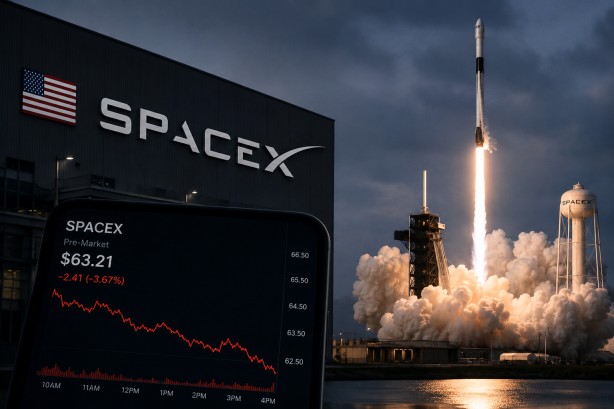
SpaceX is bracing for potential selling pressure as a significant number of its shares, up to 911.5 million, become eligible for trading. This allows certain employees and early investors the chance to offload shares they acquired prior to the company’s record-setting IPO. This development comes on the heels of a nearly 14% drop in SpaceX’s stock on Wednesday, closing at $108.27, which marks its second-largest single-day decline. The stock now sits approximately 20% below its initial $135 IPO price, only weeks after SpaceX made its debut on the public market.
Initially, SpaceX offered a relatively small fraction of its total shares for public trading, which limited supply and drove demand post-IPO. The forthcoming release of shares is set to increase availability significantly, potentially introducing short-term volatility. However, the unlocking of these shares does not imply that all 911.5 million will be sold immediately. Employees and early investors have the choice to retain or sell their holdings, especially those who bought in at lower valuations before the IPO may be inclined to cash out.
Instead of relying on a single lock-up period, SpaceX has opted for a staggered schedule to release restricted shares. This approach means that additional shares are set to be released later in the year, potentially making billions more Class A shares available for trading. Meanwhile, Elon Musk and other top executives are subject to longer restrictions, with their shares remaining locked for more extended periods than those recently released. Musk’s substantial holdings are a crucial component of SpaceX’s overall value, making any future release of executive shares a point of interest for investors.
The influx of publicly traded shares could also impact SpaceX’s position in the Nasdaq-100 index. Although its current weighting is approximately 1%, this could rise above 3.5%, contingent on the stock price and the volume of shares available during the next index adjustment. Despite the potential for short-term selling pressure, the share unlock does not alter SpaceX’s core business fundamentals. Investors are likely to continue concentrating on the company’s financial performance, growth potential, artificial intelligence investments, and execution of long-term strategic plans.