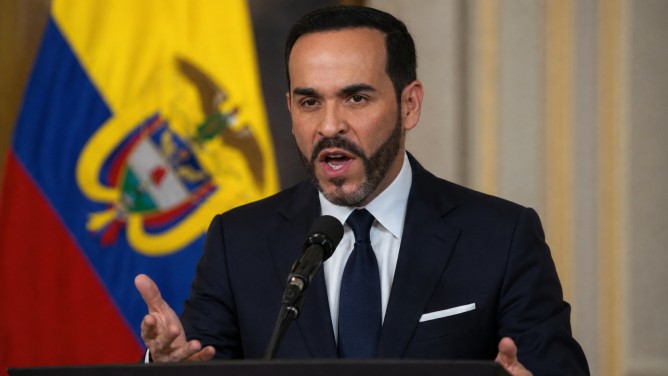
President Abelardo de la Espriella of Colombia has directed law enforcement and migration authorities to initiate operations targeting migrants without regular immigration status and foreign nationals suspected of criminal activities. The announcement was made during a cabinet meeting in Barranquilla, where the president emphasized the need for coordinated actions to begin within the week. He indicated that the initial focus would be on migrants engaged in criminal activities, followed by those who have not regularized their immigration status.
In addition to these immigration measures, President de la Espriella declared a more aggressive stance against criminal organizations involved in drug trafficking, illegal mining, extortion, and smuggling. He stated that these groups would be treated as terrorists under his administration’s policies. This hardline approach has sparked criticism from opposition figures and human rights advocates, who worry that the crackdown could compromise Colombia’s efforts to support migrants, many of whom are from Venezuela.
The majority of migrants in Colombia are Venezuelans, with estimates suggesting that hundreds of thousands live in an irregular status. Critics have called on the government to prioritize the regularization of migrants rather than implementing sweeping deportation measures. They argue that a focus on regularization would better support the migrant community and uphold Colombia’s commitment to humanitarian support.
The president’s statements have also ignited discussions regarding the terminology used in these operations. Colombian law typically describes migrants without proper documentation as being in an “irregular” situation, as opposed to being labeled “illegal.” This distinction is significant in the context of legal procedures and the perception of migrants within the country.
Overall, the proposed measures have set off a debate on the best approach to managing migration and crime, balancing security concerns with humanitarian obligations. As the government prepares to implement these operations, the impact on both migrants and Colombian society remains to be seen.